
Deceased Faculty
Stephen A. Koch, 1948-2026
The Chemistry Department will hold a memorial service on Saturday, November 14 at 12:30 PM in Charles B. Wang Center Theater, Stony Brook University in Prof. Koch's honor. There will be a livestream available: https://www.youtube.com/@sbu-cse
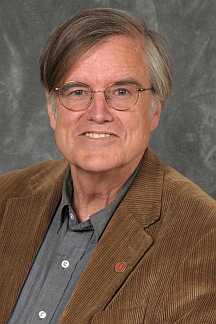
Stephen A. Koch, Professor Emeritus, passed away on August 17, 2026.
Inorganic Chemistry
Our research efforts are centered on the synthesis and characterization of new types of transition metal compounds that exhibit interesting structural, spectroscopic, and reactivity properties. In the area of bioinorganic chemistry, we are elucidating the structure and function of metal ions in biological systems through an inorganic approach. Our most recent work involves the interaction of diatomic molecules, such as N2, CO, H2, CN1- and NO with Fe-sulfur centers in enzymes including nitrogenase, hydrogenase, and carbon monoxide dehydrogenase. A prime goal is to develop iron based nitrogen fixation chemistry. We also have an established program involving the study of active site analogs for zinc-, cadmium-, and mercury-containing proteins. The "zinc finger" proteins that regulate gene transcription by binding to DNA and RNA are of fundamental interest.
In collaboration with the Welch group at Washington University Medical School, we have developed a new class of gallium and indium radiopharmaceuticals. The ability of the 68Ga complex to cross the intact blood brain barrier is a major discovery.
Solid-state metal sulfides and oxides have scientifically interesting and technologically significant electronic, electrochemical, and catalytic properties. We are exploring the analogies between these solid- state materials and homogeneous molecular compounds. In particular, we are attempting to model with homogeneous compounds, the chemistry of heterogeneous metal-sulfide catalysts that are used in the hydroprocessing of crude petroleum. The synthesis and electronic and electrochemical properties of hybrid solid-state/molecular materials is another area under investigation.